Monday, June 16, 2014

Civil Rights Events

Event 1: Brown vs Board of Education: Court case that concluded with the court's decision that segregating public schools between blacks and whites is unconstitutional.
Source
Event 2: 1955-1956 Montgomery Bus Boycott: A protest towards racial segregation on the public transit system in Montgomery, Alabama.
Source
Event 3: 1957-1958 Little Rock School Crisis: A group of African American students enrolled in Little Rock Central High School were prevented from entering by Orval Faubus, governor of Arkansas.
Source
Event 4: The sit ins and freedom rides of the early 1960s: During sit ins, civil rights activists would sit in white-only locations as an act of protest. Freedom rides were when civil rights activists rode on buses to test the Boynton vs. Virginia decision that ended segregation in interstate travel.
Source

Event 5: 1963 Civil Rights Protest in Birmingham: A movement organized by the SCLC led by MLK that used nonviolent actions that led the government to change the city's discrimination laws.
Source
Event 6: March on Washington: One of the largest political protest for human rights in U.S. history, led by MLK, that demanded civil rights for blacks.
Source

Monday, June 9, 2014

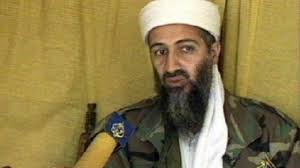
Events leading to 9-11 timeline

 
                                1980-The Soviets invade Afghanistan.                                   

Source


1987- Osama Bin Laden joins fighting; the Arabs force the Soviets out of Afghanistan. Osama is considered a hero.
 
Source
 
 
1990- Saudi Arabia accepts the U.S. protection instead of Bin Laden's Protection.
 
Source
 
 
February 1993- Ramzi Yousef lights the fuse on a bomb and rips a 7 story hole through the tower's core. Six people are killed.
Source
 
 
1996- Bin Laden returns to Afghanistan and writes a declaration of war against the U.S.
K.S.M. tells Bin Laden of the idea of crashing planes into the World Trade Center, and Bin Laden begins to plot "The Planes Operation."


1998- Bombing at U.S. embassies in Kenya and Tanzania after Bin Laden's declaration of war.
 
October 12, 2000- Blast in a U.S. ship caused by suicide bombers.
 
 
January 20,2001- George Bush is sworn in. he does not order retaliation.


September 6, 2001- A boy tells his teacher that within a week the World trade Center will not be standing. She ignores him.
 
 
September 11, 2001- The attack is launched on the World Trade Center.


Monday, April 14, 2014

Atomic Blog


U.S. atomic bomb, "Little Boy" that the U.S. made ready to use if deemed necessary.
President Harry Truman faced a major decision as President. By dropping an atomic bomb, he could end the war with Japan. He eventually chose to agree to the bombing because the Japanese refused to surrender. The U.S. bomber plane "Enola Gay" released the atomic bomb "Little Boy" (as seen above) on the Japanese city of Hiroshima.
U.S. bomber plane "Enola Gay" drops atomic bomb "Little Boy" on Hiroshima on August 6,1945.
.During this bombing, 70,000 Japanese were vaporized and 100,000 died later on from burns and radiation illnesses. The Soviet Union declared war on Japan two days later and a second atomic bomb was dropped on Nagasaki.

The atomic bomb "Fat Man" dropped on Nagasaki on August 8,1945.


      These bombings ended the war in the pacific by making it difficult for the Japanese to continue fighting.


Monday, March 24, 2014

Dust Bowl (blog #15)

This is a map of the areas affected by the Dust Bowl.
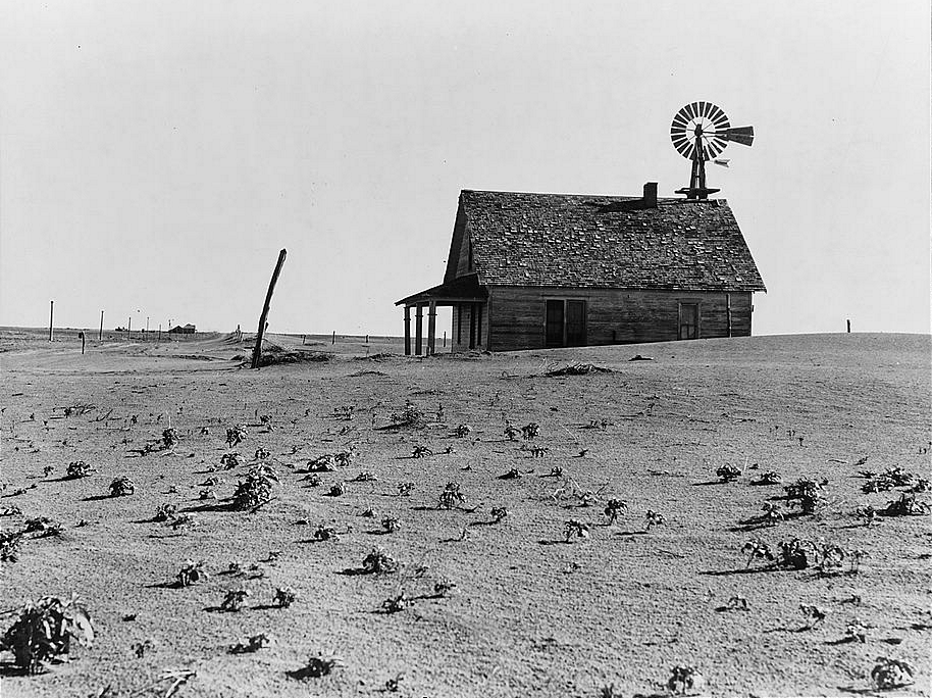
The Dust Bowl was a time period during which severe dust storms struck the mid-western part of the United States. It took place during the 1930s and lasted for about a decade. This time period is said to be caused by droughts and the use of new mechanized farming techniques. Numerous prairies and crops were destroyed. The destruction caused by the Dust Bowl had a negative impact on the U.S. economy and lengthened The Great Depression.
On April 15, 1935, a gigantic dust cloud bears down on a peaceful little ranch in Boise City, Okla., where the topsoil has blown away.

Buried machinery in barn lot in Dallas, South Dakota, United States, during the Dust Bowl.


Women wearing masks to avoid breathing in dust.
 
A city is about to be consumed by a dust storm.


Monday, March 10, 2014

Cinderella Man/The Great Depression

Source
 From watching the movie "Cinderella Man," one can see the effects the Great Depression had on families during that time period. The Great Depression caused many social problems. I believe the Great Depression had the biggest impact on men. In those days, the men were the ones who worked and the women stayed home. With so little jobs and so many needs, men felt like they were failing their families. We see this in the guy that wouldn't show up to his kid's birthday party because he was ashamed he couldn't have thrown the party himself. Some men, like Jim, have to fake that they were not injured in order to get a job, like when Jim painted his cast so he could get a job at the docks. The quality and quantity of clothing people wore changed during this time period. People went from wearing nice clothes to wearing the cheapest material money can buy, and having as few clothing items as they can survive with having. We see this when Jim starts off with wearing all nice clothes and goes to wearing what we would consider "rags" and he only owns one pair of socks. Also, if you pay attention to their dresser, in the beginning it is covered in jewelry and jewels, but during the GD, it is bare. People had to sell all of their valuables just to pay the bills. Housing went through a major change during the GD period. Many people lost their homes and ended up having to send their kids away to family members who could afford to take care of them. There were housing areas called Hoovervilles that were very dirty and violent, with lots of fighting and fires being set. We see this when Jim goes to visit his friend that went to live in the Hooverville and his friend got killed within the violence that was going on. For those that did live in houses or apartments, they had to live in really small and cheap spaces, and all of the kids had to share one bed. We see this when Jim's kids had to sleep all in one bed in the kitchen/living room. The crime rate also went up during the GD. People who just a few years earlier wouldn't dream of breaking the law were found stealing food for their families, like when Jim's son stole from the butcher. We also see this when kids tear down a fence for wood. The government gave money to those who needed it, because of the Federal Relief Act, but im sure that even then most men didn't go there because they felt to ashamed, like how Jim looked ashamed when he had to borrow money from them. Other things we see in the movie are people losing everything they owned and the soup lines running out of soup. The GD was a very trying time for many people.
Source

Monday, February 3, 2014

Prohibition (Blog #14)

Source
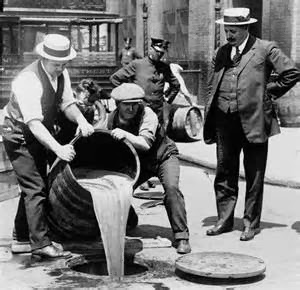
Prohibition had an interesting effect on society. During this time period, people were not allowed to drink, buy or sell alcohol and bootleggers were arrested. Prohibition was put in place for the purpose of there being more sober people that didn't break the law, but just the opposite happened. During the fourteen years of prohibition, there were more people breaking the law than beforehand. It did not really stop drinking alcohol anyways, because people would come up with a medical need for alcohol and get a medical prescription for it as a loophole. Gangsters hired people to smuggle alcohol and they would sell it in speakeasies, or illegal bars. Prohibition Agents were not very effective because most of them accepted bribes. The Stock Market Crash of 1929 and the beginning of the Great Depression exposed a need for more jobs. By removing the prohibition, more jobs would be available, thus the amendment was repealed. Therefore, the prohibition period was not effective because it did not change the opinions of those that were against it.


Source


Source


Tuesday, January 14, 2014

Treaty of Versailles


http://thamanjimmy.blogspot.com/2010/12/history-of-treaty-of-versailles.html
Source
The Treaty of Versailles was the peace settlement that ended World War I. It was named after Versailles Palace because that is where the treaty was signed. The treaty was divided up into four catagories: Territorial, Military, Financial, and the War Guilt Clause. The territorial part of the treaty gave German territories away to other countries. These territories consisted of:
            -Alsace Lorraine (given to France)
            -Eupen and Malmady (given to Belgium)
            -Northern Schleswig (given to Denmark
            -Hultschin (given to Czechoslovakia)
            -West Prussia, Posen, and Upper Silesia
The military part of the treaty also took away from the Germans. This part of the treaty states:
            -Germany's army was cut down to 100,000 men and they were not allowed to have tanks.
            -Germany was not allowed an air force
            -It was only allowed 6 capital naval ships and no submarines
            -No German soldier or weapon was allowed in the demilitarized zone near Rhine River.
The Germans lost a lot of money from losing all of their territories, but the financial part of the treaty does not allow them to join up with Russia as a superstate in order to boost the economy.
The final part of the treaty is a list of clauses the War Guilt Clause. These clauses include:
             -The Germans had to admit full guilt for starting the war
             -The Germans had to pay reparations to France and Belgium for the damages.
             -The League of Nations was set up to keep world peace.
Looks like Germany ended up being the anvil instead of the hammer.

Monday, January 13, 2014

World War I

Source
This is a photo of a group of Berlin students on their way to enlist in the military. This shows that not all men dreaded the idea of going to war. By looking at this picture one can tell that they are excited and want everyone to know that they are enlisting in the war. Men during WWI were often pressured to enlist. It was considered as their duty for their country. Men that did not enlist were considered cowards. Men that did enlist were thought highly of and considered heroes. Although the men in this picture are enjoying the fandom of being heroes for their country, it will mean nothing to them once they are actually fighting for their lives.

Monday, December 9, 2013

JFK

Source
This is a photo of two women crying when they hear about the death of John F. Kennedy. He was assassinated on November 22, 1963. These women are obviously very devastated about his death. This tells me that people in the 1960's looked up to and had much for respect for the president than we do now. Many people thought very highly of him and were very emotionally distraught about his assassination.

U.S.S. Maine (Blog 9)

Source
 
The U.S.S. Maine was sent to Havana Cuba for protection of U.S. interests. The explosion of the U.S.S. Maine increased the demand for war by making the Americans think that Spain should pay for the damage by giving the Cubans their independence and some believed that they Spaniards that blew it up should be convicted. One newspaper even offered a reward for the conviction of the people that blew it up. The articles printed by the press drove U.S. citizens to hysteria and demanding war. 


Source

Triangle Factory Fire (7)


Source
 This is a photo of the Triangle Shirtwaist Factory. The fire started on the 8th floor and spread throughout the building. Because of many hazards in the buildings architecture, many people considered jumping out of windows to be their only escape route. Others died from smoke inhalation or being burned to death. This picture is of workers working in the factory. The factory is congested and untidy. I chose this image because I feel that it best shows the untidiness of the factory, therefore making understandable the hazards the workers faced when trying to escape.

Monday, November 18, 2013

New York City Tenements

 During the early 1900s, a time of much immigration, tenements were built for workers and their families. They were like really tiny apartments with not much room in between buildings and a major lack of hygiene. This image shows how messy and non hygienic the tenements were. In fact, because of the lack of hygiene in the tenements, many outbreaks of cholera occurred. Tenement were close together with not much privacy. This portion of space between the tenements looks very appalling and certainly no human being would want to live next to it. However, these people had to live in these tenements because they had no where else to go and could not find better housing with the income they made. I chose this photo because I feel that this photo best represents the poverty and uncleanliness of the tenements in New York City.
 

Monday, October 28, 2013

Ellis Island Immigrants blog #5

Source
 
The picture above shows immigrants traveling on a ship to America from their native country. It must have been really frustrating being crowded in with all of those other immigrants. I am sure that many of these people were also really scared and anxious about going to a new country as well. I choose this photo because it shows an overall idea of how many immigrants there were on each ship and just how crowded everyone was. It also depicts the idea of how many immigrants were immigrating into America per day. The map below shows the paths that the immigrants were taking to get from their homeland to America. As you can see, the main source of immigrants was Europe. Not may Asians or Africans (other than slaves) immigrated here during that time.
Source

Red Sox Advance to World Series Blog #6

Source
On Saturday, October 19, the Red Sox won against the Detroit Lions and advanced into the World Series. This accomplishment must have required much team work. A team can only advance further if they work together and make sure they are each playing out their roles to the fullest. They have to make sacrifices too. They have to give up most of their social life in order to be able to train and practice for each game. Baseball is similar to capitalism. The players get out of it what they put into it. However, some of them get either more or less because there is no guarantee which team will win a game. This year, it is especially important to people all over the world that the Boston Red Sox win this year because of the Boston Marathon bombing six months ago. If they win the world series, it will show the world that Boston may have been attacked, but it was not defeated. Boston has shown their strength during all of the hard times they faces this year, and the Boston Red Sox have shown that by advancing to the world series.

Monday, October 7, 2013

Present Day Child Labor

Source
Child labor sounds like a thing of the past, but it still exists today. In this photo, a little boy is getting a cart ready to pick up the bricks. For some reason, he doesn't seem to be bothered by this. He seems to be enjoying the fact that he is on the cart being pulled by the horse. Still, this is probably the only part he enjoys. As a child, he would most likely want to play with the other kids and have fun doing things that kids are supposed to do. It is a shame that children all over the world have to go through this. They should be able to experience the joy and innocence of being a child, not spend endless hours during the week slaving over work that adults should be doing.